
The step most likely to fail in a central kitchen is not the wok but dosing — manual error runs 5 to 15 per cent; how to put a number on the loss and what a dosing robot really saves.
Before the wok: why dispensing automation comes first in a central kitchen
Most owners renovating a central kitchen go straight for the equipment that visibly produces output — the stir-fry machines, the packaging lines. Anyone who has actually run one of these kitchens will tell you that the stage most likely to go wrong, and the one most worth fixing first, is dispensing. However good the recipe, three grams too much salt or five grams too little sugar gives you two different flavours; weigh one batch of ingredients wrong and the whole pot, the whole batch, is scrapped. Human error at the dispensing bench is both a cost leak and the source of taste complaints. This article works through how large the error really is, how to put a number on the loss, and what dispensing automation can genuinely save.
Manual dispensing error is far bigger than you think
In a central kitchen ingredient room, experienced hands grab salt by feel and pour soy sauce by eye. It looks fast. The error is not small. In projects we have measured, hand-scooped powder ingredients typically run plus or minus 5 to 15 per cent, and liquids poured by feel are worse, reaching 20 per cent when the line is under pressure. Someone will say "we weigh it". But weighing only covers the main ingredients. Dozens of minor ingredients and seasonings, each one weighed, several hundred pots a day — you cannot keep up, and you end up back at hand-scooping. What is worse, the error is unstable: the same cook is steady in the morning and drifts in the afternoon; a veteran and a new hire differ by a noticeable margin; shift A and shift B turn out two different flavours. Once the error is in the pot, it becomes a difference in saltiness the customer can taste.
Putting a number on the cost of error
Seasoning costs look small until you multiply by volume. Take a central kitchen supplying 10,000 meals a day. At 0.8 yuan per meal in seasonings, that is 8,000 yuan a day, or just over 200,000 yuan a month at 26 production days. At an average 5 per cent dispensing error, more than 10,000 yuan of seasoning cost leaks away every month; on a project running a 10 per cent error, the annual loss can reach 200,000 yuan and more. That is before taste incidents: a batch that comes out too salty or too bland, a catering client returning the whole batch, a contract-catering client deducting payment on complaint — one incident can wipe out half a year of seasoning savings. Hold the error under 1 per cent and most central kitchens save six figures a year on seasonings alone. The taste ledger is worth more still: only with batch-to-batch consistency do chain outlets and contract-catering clients renew with confidence.
What a dispensing robot actually does
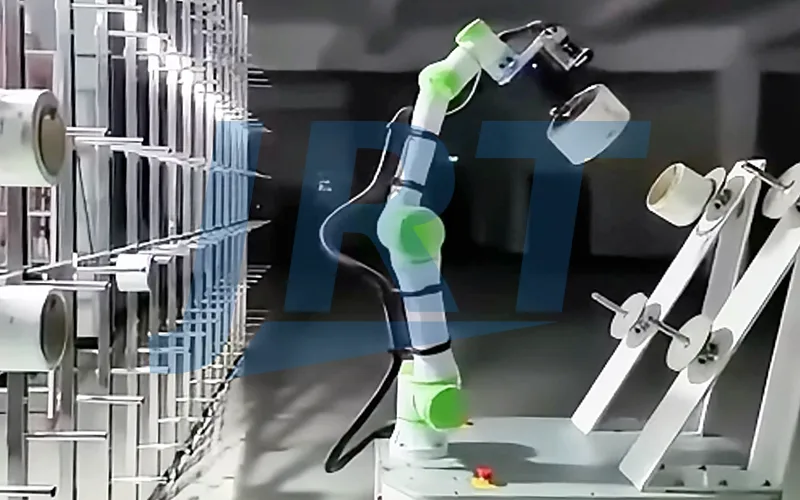
Dispensing robots on the market fall into two approaches. The first is the metered feeder: powders measured by screw or vibration, liquids by pump, with accuracy down to plus or minus 0.5 grams for powders and the 0.1 gram level for liquids; several dozen ingredient silos map to a single dispensing order, and the machine weighs, dispenses and logs automatically in recipe sequence. The second is the vision-assisted weighing station: a robotic arm picks up ingredient buckets and places them on a scale, weighing out each item to the recipe's gram weight, suited to situations with many main and minor ingredients and repeated pick-and-place; output data flows into the system automatically. What both have in common is a digital recipe: the dispensing order is issued straight from the computer, and who dosed it, how much and at what time is logged and traceable from end to end — something manual dispensing cannot do.
If you start with dispensing, how does the payback work?
Dispensing automation has three returns, and it is easy to leave one out. First, labour saved: an ingredient room usually staffs two people, one weighing and one checking; with the machine, most projects cut one or two people per shift, and two people cost 100,000 to 140,000 yuan a year. Second, waste reduced: as calculated above, holding error from 5 per cent down to 1 per cent saves over 100,000 yuan a year on seasonings alone, and once you add the improved yield on main ingredients this usually outweighs the labour saving. Third, quality stabilised: the recipe is locked in the system and no longer depends on one cook remembering it; a new product is developed once and replicated forever, and bickering between R&D and production drops by more than half. Equipment runs from tens of thousands to two or three hundred thousand yuan, and for most central kitchens above 10,000 meals a day the payback is around a year. Smaller kitchens need not rush: below 2,000 meals a day, you can start with a single metered feeder and bring only the seasoning stage under control — small investment, fast results. One hidden benefit is easy to overlook: every pot's dispensing data is logged automatically, so when a customer complaint or food-safety question arises, the whole batch's dispensing and batch records export in minutes, with no paper sheets and no relying on memory. When a chain brand's head office audits the plant, or a client runs a tender, this is a real point in your favour.
Three things to settle before you buy a dispensing machine
First, standardise the recipes. Dispensing automation presupposes a clear BOM — a bill of materials with gram weights — for every dish. A central kitchen where the recipe still lives in a veteran cook's "a bit of this, a bit of that" has to quantify the recipe before automating; the order cannot be reversed. Second, match the material forms. Oils, powders, pastes and granules need different metering mechanisms, so before choosing, list all several dozen of your seasonings and confirm the machine handles every one — better than discovering on delivery that the oyster-sauce paste clogs the line. Third, cleaning and shelf-life management. The silos and lines touch sauce every day; whether they strip down quickly for washing, and how leftover material in the silo is handled, decides directly whether you pass hygiene inspection and whether staff are willing to use the machine at all. Answer these three and then talk equipment; only then does dispensing automation genuinely land, rather than adding one more exhibit for the kitchen to maintain.
The content of this article is for selection reference. Specific figures are subject to the manufacturer's official parameters and on-site verification.