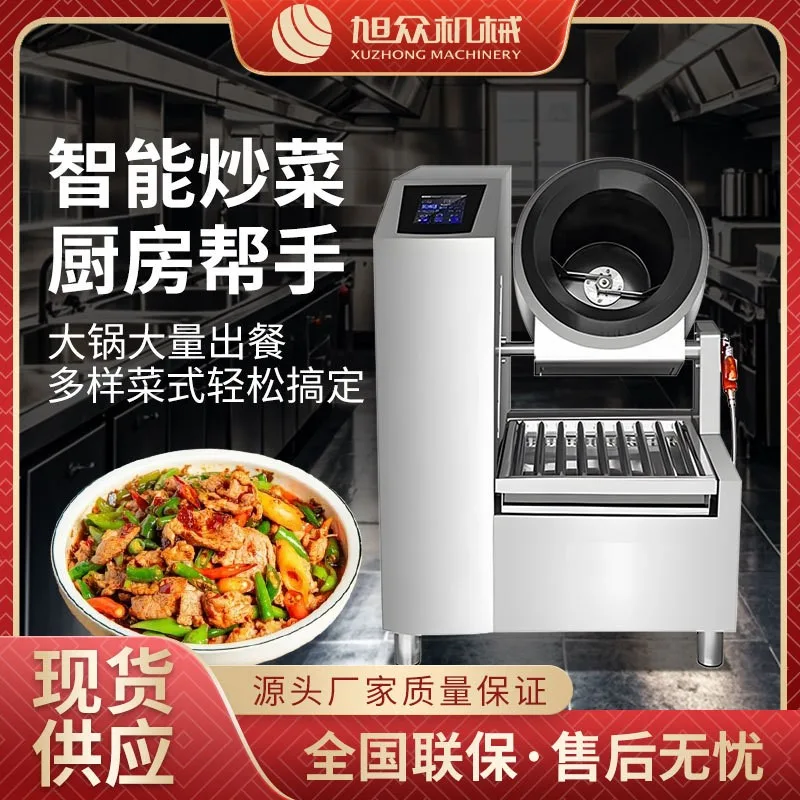
Equipment that will not fit, or that fits and then works badly, is almost never the machine's fault — nobody checked the site before the order was placed. Cooking robots need power and extraction, dishwashers need supply and drainage, serving robots need clear routes and network, disinfection robots need an empty room and a clean floor.
Before the robots arrive, walk the site conditions checklist first
Equipment that arrives and will not fit, or that fits and then works badly, is in most cases not the machine's fault: nobody walked the site against a checklist before the order was placed. Cooking robots need power and fume extraction, dishwashers need a water supply and drainage, serving robots need clear routes and network coverage, disinfection robots need an empty room and a clean floor. This article sets out the list we use on site visits, drawn up from experience. Going through it item by item before you order saves a great deal of trouble. The list is not complicated, but every item you miss can easily turn into a change order once the equipment is on the floor.
Item one: power — the one that goes wrong most often
Different robots have very different power requirements. Small serving robots and milk tea robots mostly run on single-phase 220V and will work from an ordinary socket, though the higher-powered ones still need a dedicated circuit; cooking robots and conveyor dishwashers generally need three-phase 380V, with cooking robots commonly drawing 15 to 30 kilowatts and the heating section of a dishwasher drawing more. Check four things: whether the site has a supply at the right voltage; whether the capacity is sufficient, counting every other device on the same circuit; how far the incoming point is from the installation position and whether the cable run has to be redone; and whether there is reliable earthing. In refurbished premises the most common problem is that the main distribution board does not have enough capacity — an upgrade can cost anywhere from a few thousand to tens of thousands, and it takes time on the schedule, so check before you order, not after.
Item two: dimensions and the route in
Start with the footprint and the working space: how much service access and operating room the machine needs at the front, back and sides varies by model, and a side service clearance is generally 600 to 800 millimetres — leave less and you will have to move the equipment to repair it later, which doubles the labour cost. Then look at the transport route: door openings, corridor corners, goods-lift dimensions, steps and thresholds. Many machines are only found not to fit the lift once they are on site, and then it is a crane or a dismantled doorway. Before ordering, ask the manufacturer for the packed dimensions and check them against the door width and turning radius on site. That piece of homework cannot be skipped.
Item three: water supply and drainage
For equipment with a water circuit — dishwashers, ice machines, milk tea machines — check three things: the distance to the supply point and the pipe diameter, bearing in mind that below 0.2 megapascals of pressure you will need a booster; water hardness, since in hard-water areas a scale inhibitor or softener is advisable, otherwise the heating element scales up and energy consumption climbs; and the drainage diameter, fall and grease separation. Dishwasher discharge is hot, which places requirements on the pipe material; back-of-house drainage generally has to pass through a grease trap, and the new equipment's connection has to match the existing pipework — do not let the machine's discharge wash out the grease trap.
Item four: extraction and ventilation
Cooking, grilling and frying robots generate fume and heat while working, so a fume hood and fume purification are essential. The hood has to be wider than the equipment, and the air volume is calculated from the heat output of the machine and the number of burners — bigger is not better: oversize means more noise and a higher electricity bill. Noodle cookers, steaming cabinets and dishwashers give off steam, so top-of-unit exhaust has to be considered, or nobody will be able to stay in the kitchen in summer. Duct routing, the position of the purifier and fan noise are the three points most likely to blow the refurbishment budget, so confirm them all during the site survey.
Item five: routes, floor and load bearing
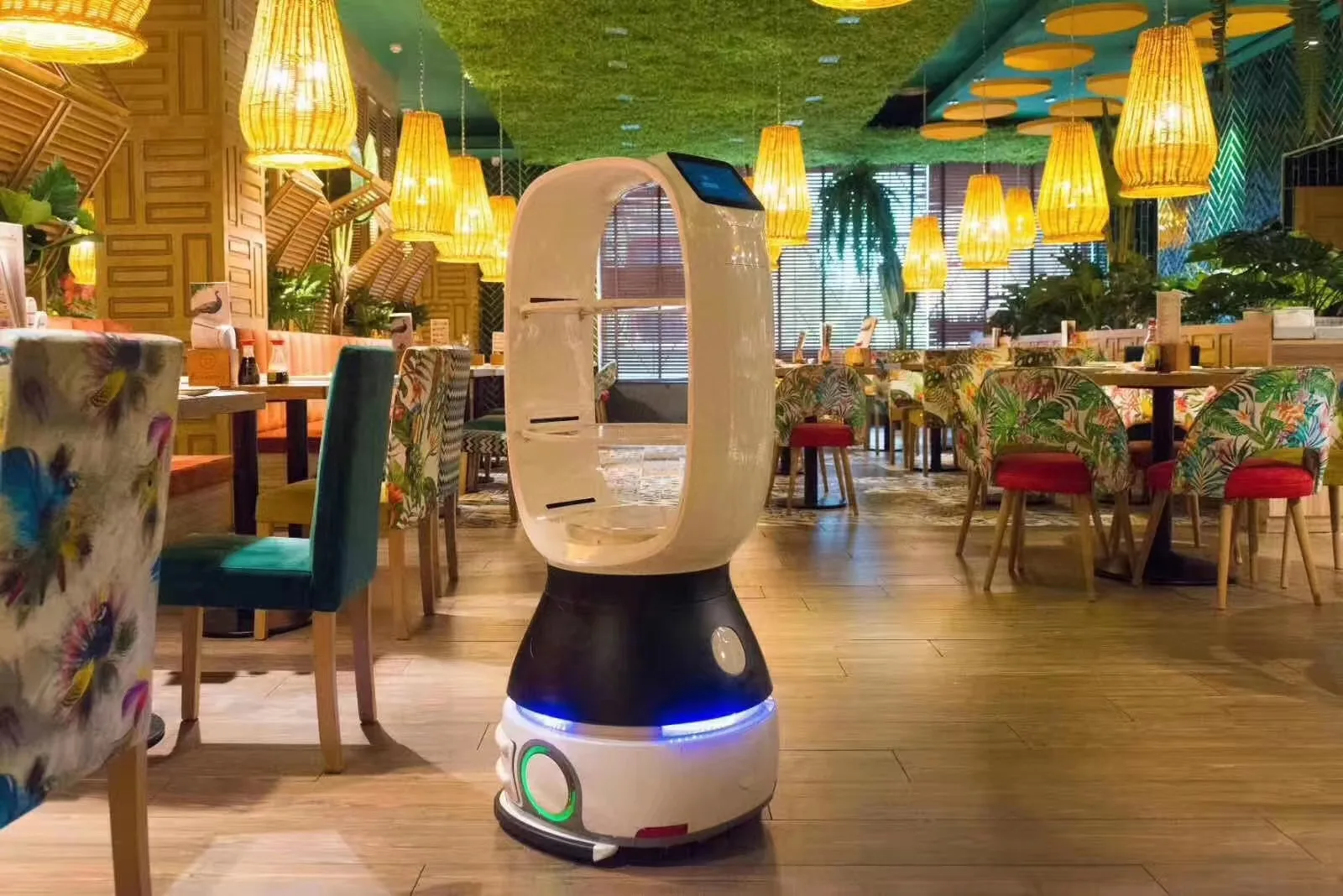
Serving robots and plate-clearing robots run on wheels and are very sensitive to the floor and the traffic routes. A clear aisle is generally not less than 800 millimetres, with an adequate turning radius at corners; thresholds, steps and ramps that exceed the limit have to be dealt with; a floor that is uneven or has wide tile joints will make the robot bump and even jam a wheel; and waiting areas at the pass and the lift lobby need planning too, or robots and people will fight for space at peak times. Then there is load bearing: a rice production line, or a dishwasher full of water, weighs in tonnes, so in an older building check the floor slab capacity — the safe approach is to ask the manufacturer for the equipment weight and the foot distribution, and have the building management or a structural engineer confirm it.
Item six: network and signal
Most robots today need to be online: map updates, software upgrades and remote fault diagnosis all depend on the network. A back-of-house kitchen is dense with metal equipment, where WiFi attenuates quickly, and good signal in the front of house does not mean good signal in the kitchen. Ask clearly whether a cooking robot degrades gracefully or simply stops when it loses connection. Check the WiFi coverage on site and add access points, or run cable, rather than waiting until the machine is dropping offline constantly to investigate.
Item seven, sitting outside the list: operational readiness
Once the conditions attaching to the equipment itself are checked, there are the operational conditions: whether the operators have been assigned and how the manufacturer will arrange training; whether cleaning windows have been preserved in the schedule, since equipment that touches food has to be stripped and washed daily; and where trimmings, waste and packaging will go. If these are not arranged in advance, the machine will sit idle in its first week because nobody knows how to use it and nobody has been told to clean it.
Eight items — print the list and tick each one off
- Voltage and capacity: single-phase or three-phase, power draw, dedicated circuit, earthing;
- Transport and installation space: door width, lift, corners, service access;
- Water supply and drainage: pipe diameter, pressure, hardness, grease separation and fall;
- Extraction and ventilation: fume, steam, heat, purifier and air volume;
- Routes and floor: aisle width, thresholds and ramps, floor evenness;
- Load bearing and fixing: equipment weight, floor slab capacity, anti-tip restraint;
- Network coverage: WiFi signal, access point placement, behaviour when offline;
- Operational support: operators, cleaning windows, waste and trimmings handling.
If any one of these eight cannot be answered on site, do not sign the contract yet — ask the manufacturer to carry out a formal site survey. A supplier who offers a survey and can produce a conditions drawing is more reliable than one who only sends a quotation. Half a day spent checking conditions saves the rework and the arguments after the equipment is delivered.
The content of this article is for selection reference. Specific figures are subject to the manufacturer's official parameters and on-site verification.